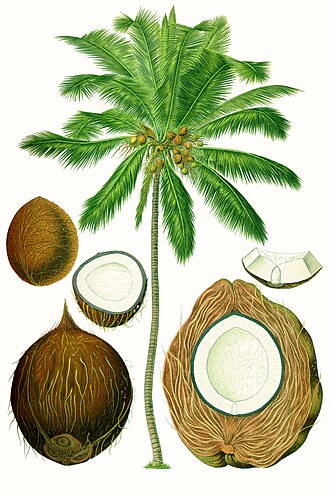
The coconut (Cocos nucifera) is a tropical fruit known for its versatile uses, including its water, milk, oil, and fiber. Often referred to as the "tree of life," the coconut palm is cultivated extensively in tropical regions, particularly in Southeast Asia, the Pacific Islands, and the Caribbean. The term "coconut" is derived from the Old Portuguese and Spanish word coco, meaning "head" or "skull," due to the three indentations on the shell that resemble facial features. In Hebrew, the coconut is called קוקוס (kokos). Other relevant translations include Kokosnuss in German, Noix de coco in French, and Nuez de coco in Spanish. The coconut is not a true nut but a drupe, a type of fruit with a hard shell and a single seed. It is a crucial food source in many cultures, providing essential nutrients such as fiber, vitamins, and minerals. Additionally, coconut products are used in various industries, including cosmetics, pharmaceuticals, and construction.